
Our findings · November 2026
The proposed sale:
What we know now
What has changed and why we believe there's a better way forward.
Over the past three months, Friends of Lower Field has been gathering and examining documents relating to the proposed sale of playing fields and other land at KEVICC.
Through Freedom of Information requests, correspondence with public bodies, archival research and a detailed examination of the school's original proposals, we've begun to piece together the history of a decision that will have lasting consequences for Totnes and the surrounding area.
Our work has uncovered information that has not previously been widely available. It has revealed significant changes to the improvements originally promised in return for selling the land, questions about the government approval process, and concerns about how existing commitments to community sport have been implemented. It has also revealed what we believe are potential errors, assumptions and a lack of meaningful consultation during the initial application for permission to dispose of the land to the Secretary of State.
We believe the people of Totnes deserve to understand what has happened, what has changed and what the proposed sale would actually deliver, as well as the basis on which these decisions have been made.
With the school's public meeting approaching on 10 November, we want to share what we have established so far, alongside the questions that remain unanswered.
Please note that while we have striven to make clear what we have found out, there is still much to know, and we have pending requests with various official bodies which will reveal more. We will share this information as we get it.
What the community was originally promised
Related evidence: Original application — FOI 2 · Original pitch plan — FOI 5B
In June 2021, KEVICC launched a consultation on proposals to rationalise its estate, concentrating facilities on the main Redworth site and selling land considered surplus to requirements.
The consultation presented the sale as the only means of raising the funds to deliver a substantial programme of improvements. These included a new all weather football pitch, improved drainage to the Redworth playing field, refurbishment of the gym and sports hall, a new sixth-form block, removal of ageing temporary classrooms, extensive improvements to the outdoor environment including an auditorium for teaching and performances, and better security and accessibility.
The proposals were presented as an opportunity to create better facilities for pupils and the wider community, while addressing the financial and practical difficulties of operating a split site.
For locals concerned about losing playing fields, the promised improvements were central to the proposition: the community was being asked to accept the permanent loss of land in exchange for substantial investment in the school, including new and improved sports provision.
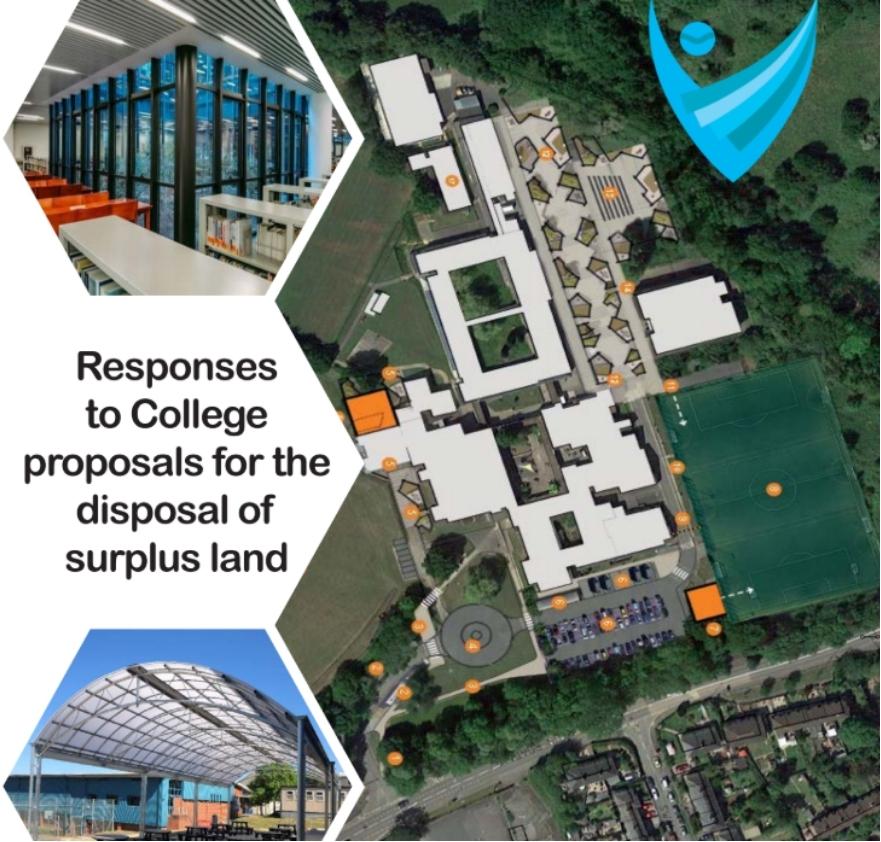
This consultation was then used as a fundamental part of an application to dispose of playing field and non-playing field land at the school in November 2021.
But those plans have since been significantly altered.
We now know that, four years later, the proposed improvements were substantially reduced, with several described as no longer needed. In addition, ESW was allowed to take over the application from the school and a provision was inserted allowing officials to potentially approve spending the proceeds at other schools within the muti-academy trust.
Documents obtained by Friends of Lower Field reveal how this happened. We are seeking further information to understand why this happened and what justifications were given.
How the government's approval changed
Related evidence: February 2025 decision — FOI 19
The government initially approved a different disposal.
The School Playing Fields Advisory Panel recommended approving the disposal in June 2022. However, the decision was delayed while the Department for Education (DfE) explored whether some of the land could instead accommodate another school, River Dart Academy.
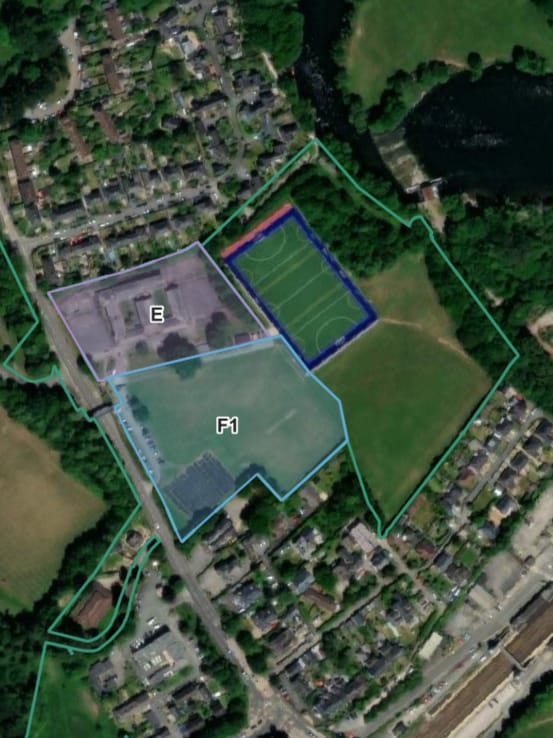
In February 2025, the Secretary of State approved the sale of plots A, B and C, while proposing to transfer the Lower School plots E and F1 to Devon County Council for a nil sum for the relocation of River Dart Academy from its site in Dartington.
The decision letter restricted the use of sale proceeds to any or all of six specified categories of capital improvements at KEVICC, including the additional all-weather pitch and sixth form block.
But within months, both the land approved for sale and those spending conditions would change.
In October 2025, the government replaced its original decision
Related evidence: Revised consent — FOI 20 · View proposed sale land
On 29 October 2025, the DfE issued a revised decision to Education South West (ESW), the academy trust responsible for KEVICC, superseding the February approval.
The River Dart Academy relocation had been withdrawn due to planning concerns, meaning the freehold disposal of plots E and F1 could now be authorised. Plot C would now be retained.
Significantly, the conditions governing how the sale proceeds could be used were also rewritten.
Rather than requiring the original package of improvements, the revised approval agreed with ESW’s request that the only requirements should be new changing facilities at the existing all weather pitch, drainage improvements to the Redworth playing field and refurbishment of the gym/sports hall.
Of the raft of other improvements, the DfE papers show the trust said some had already been delivered using alternative funding, some were anticipated to have been completed before the proceeds would become available, and others were no longer needed or considered to represent value for money - among them the new all weather pitch.
“The trust has stated that this would not represent a value for money proposition. The school already has access to an AWP, which is regularly used by the school as part of the curriculum delivery as well as the provision of extra curricular provision. The trust states that a brand new AWP could absorb £1 million upward of precious funds to create a facility that is not needed.”
Originally pitched as one of the major benefits of selling the land, this new 3G pitch is no longer a condition of the government's approval.
In discussions with Friends of Lower Field, the school has emphasised that sports facilities remain a priority and that it would still like to build a new 3G pitch. However, this should now be considered an aspiration rather than a funded commitment attached to the sale.
And there is a further complication. We understand that the school has considered building any future 3G pitch on the Redworth playing field, rather than in the location identified in the original consultation (previous tennis courts on the Redworth site now used for staff parking). This would reduce construction costs, but would also replace existing grass playing space used for cricket, athletics and informal recreation.
Replacing this space with a pitch purely for football and rugby use is inconsistent with the consultation’s vision of widening the number of sports on offer at the school.
Further changes in March 2026
Related evidence: Amended valuation condition — FOI 21
The documents we have seen also show that a clarification was issued in March this year. This changed the wording from ‘open market value’ to simply ‘market value’ and allowed the trust to use a surveyor’s letter rather than a formal Red Book valuation to establish the market value of the land.
The proceeds could now be spent outside KEVICC
Related evidence: Revised government consent — FOI 20
Another significant change concerns where the money could ultimately go.
The October 2025 varied consent gives the DfE the option to approve investment of the proceeds in other schools within Education South West if no suitable capital projects at KEVICC can be identified.
The trust has maintained that the proceeds will benefit KEVICC, but this is nevertheless a substantial departure from the original proposition presented to the community. The justification for disposing of the land has consistently been the need to improve the school.
The DfE papers explain that ESW expects it could take another five or six years before the sale generates proceeds, and that greater flexibility is therefore needed because the school's requirements may change.
We understand the practical argument, but it makes a transparent, costed investment programme all the more important. What improvements does ESW now intend to deliver, what will they cost, and what guarantees can it give that the proceeds will be fully invested in KEVICC?
Was the community ever properly consulted on what is now proposed?
Related evidence: Original consultation — FOI 12A · Consultation report — FOI 13
The original consultation ran from 14 June to 26 July 2021, almost entirely during the period of COVID-19 restrictions. England's remaining legal limits on social contact were lifted on 19 July, just one week before the consultation closed.
At a time when normal community activities, including organised sport, had been severely disrupted, the school sought views on the future of land that had served generations of residents.
Only 99 responses were received. The school reported that 77% supported its proposals, but 71% expressed concerns. Those figures need to be understood in the context of what respondents were actually being asked to consider: a combined proposition involving both a substantial programme of improvements and the sale of land. It was not possible to agree with just one of those elements; Q3 within the survey was heavily loaded, asking whether the public were in favour of consolidation of the site onto the south side of the road - this was later used as justified support for the land disposal.
The earlier Why This Field campaign subsequently challenged the consultation's methodology and representativeness. Its own survey in 2022 attracted 588 responses, indicating a much wider level of public interest and concern.
The DfE's guidance is that consultations should take place within 12 months of an application for disposal. That requirement was met when the original application was submitted in November 2021. However, the government did not issue its initial decision for another three-and-a-half years, and the conditions were later substantially rewritten.
Despite these significant changes to the commitments originally made to the community, there has been no further public consultation.
The issue is not simply that so much time elapsed between consultation and approval - it is that the community was consulted on one package of benefits and the government ultimately approved a materially different arrangement.
We believe the DfE should explain why it considered the 2021 consultation sufficient, particularly given the exceptional circumstances in which it took place and the subsequent changes to the proposed investment following the school transferring to the Education South West multi-academy trust in 2022.
How thoroughly did the DfE scrutinise the revised proposals?
Related evidence: Advisory panel updates — FOI 17 · Panel queries — FOI 18
The documents obtained through our information requests raise further questions.
In May 2025 the DfE suggested that the revised arrangements did not need to return to the School Playing Fields Advisory Panel for further consideration, on the basis that the amount of playing field land involved in the disposal had not changed.
However, in June, the panel asked how the DfE had satisfied itself that improvements originally proposed had already been delivered. The department's response relied on information supplied by the trust, with officials confirming that they had not visited the site to verify the position.
The panel also asked whether community use of the land had changed since the original application. The DfE responded:
“The academy trust has not told officials about changes to community use at the site though it does remain of great interest as the department frequently receives correspondence from members of the local community and councillors.”
These responses are concerning. The absence of reported changes in community use is not evidence that no changes have occurred. In fact we know that girls and women’s football has exploded in popularity since the Lionesses won the Euros in 2022 - and the Red Pandas are a perfect example of that.
They have taken full advantage of Lower Field since they were set up that same year and now have more than 100 girls playing across U8, U10, U12 and U14 leagues. This season the club added a women’s team to its line-up, which evolved from a casual weekly kickabout on the field.
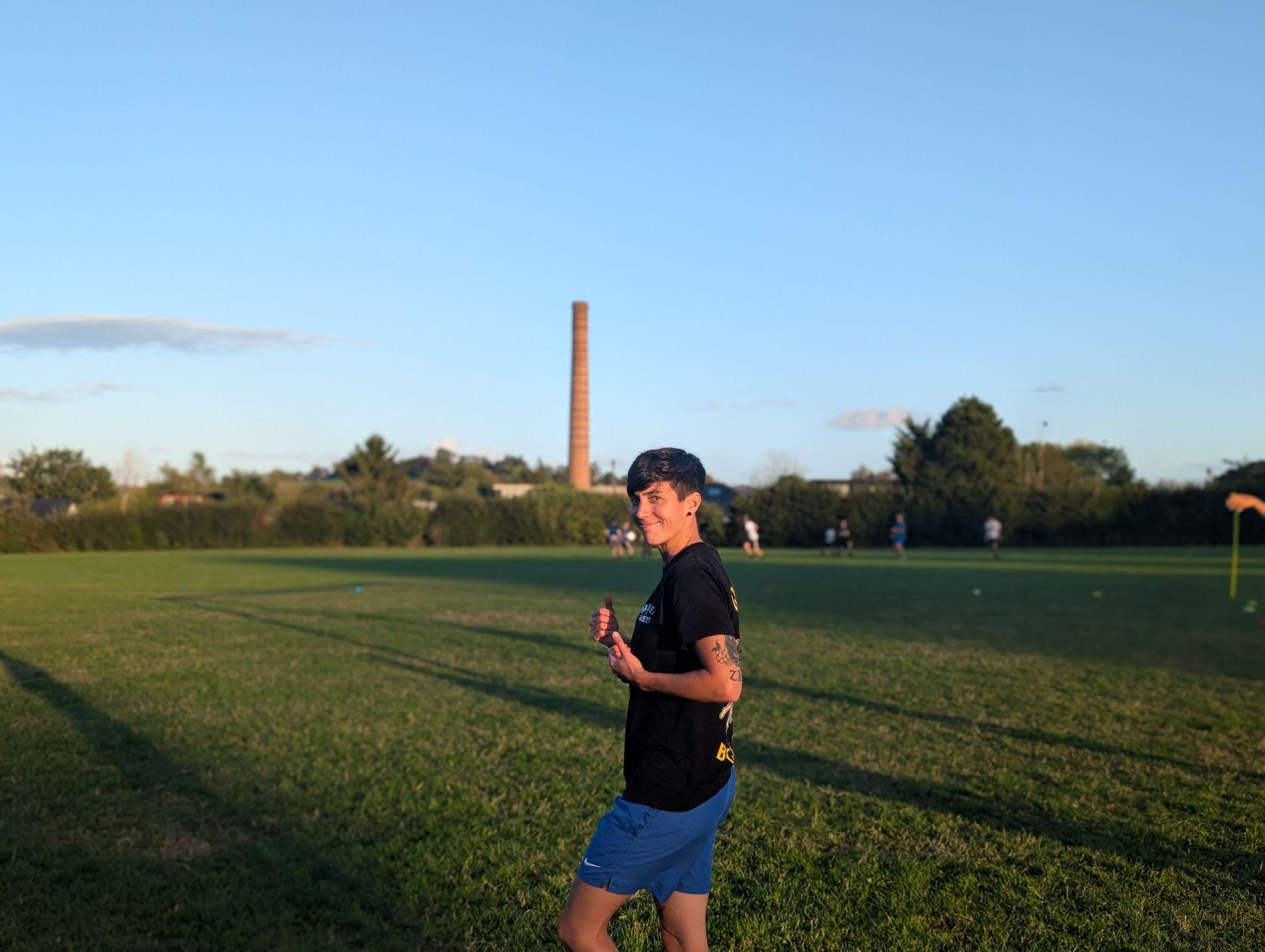
We have requested further documents to establish whether the panel challenged the department's responses to its questions, sought additional evidence or was satisfied with the information provided. Until those documents are available, we cannot say whether further scrutiny took place.
Were existing commitments to community sport ever honoured?
Related evidence: Community Use Agreement — FOI 11 · Locate community facilities
Rewind to March 2018, when the all weather pitch was being resurfaced. A Community Use Agreement was put in place between KEVICC and South Hams District Council (SHDC), which had contributed £320,000 of Section 106 money.
The agreement was intended to ensure that the facility delivered lasting benefits for local people. Its aims included increasing participation in sport and physical activity, particularly among groups with low participation rates, and providing affordable access to the facility.
These were supported by specific commitments. The agreement required a management committee to be established within three months, including representatives of community users, to oversee community access, booking arrangements, pricing, promotion and financial performance. Under its terms of reference, the committee was to meet at least three times annually, maintain minutes and produce an annual report.
The school was also required to prepare, implement and annually review a marketing strategy for community use. The agreement provides for an accessible booking system accommodating both block and casual bookings, and specifies a 20% discount for junior bookings.
We now know that some of these fundamental commitments have never been implemented. The required management committee was not established and there is no written practical policy framework, as required.
We are seeking formal clarification from KEVICC, ESW and SHDC about why these obligations have not been fulfilled and why this has been allowed to continue for eight years.
The commitments around participation are particularly important. The agreement envisages a marketing plan to actively promote it to people who are underrepresented in sport, rather than simply making the pitch available to established clubs. We want to know if any steps have been taken to encourage groups who may face barriers to participation, and if so how the success of those efforts has been assessed. In light of the later questions about demand from the School Playing Fields Advisory Panel, this takes on some significance.
There are also questions about practical access to the facility. Community users have described difficulties with booking arrangements, while the provision of basic amenities, including drinking water, changing rooms, toilets and showers, remains a concern. The agreement expressly states that these should be made available for community use.
Where is the sinking fund for resurfacing?
Related evidence: Community Use Agreement — FOI 11
The Community Use Agreement also contains specific financial obligations. Clause 8.1.1 requires the school to contribute to a ‘contingency or sinking fund’ for major maintenance, repairs and eventual renewal of the sports facilities. It provides for an annual sum to be set aside from pitch income, provided that income covers operating expenditure, and bases the fund on an assumed 15-year replacement period.
The same clause requires income and expenditure relating to the operation of the sports facilities to be reported separately from the school's accounts. The management committee is also required to review financial performance and progress towards sinking fund targets.
That places anticipated pitch resurfacing around 2033, at an estimated cost of £250,000. We would like to know if the sinking fund exists and, if so, whether it is on target to meet this likely cost.
What has South Hams District Council done to ensure compliance?
Related evidence: Locate facilities and sale parcels
As a party to the Community Use Agreement and having contributed substantial public funding towards the pitch, SHDC has an important role in explaining how the community benefits associated with that investment have been safeguarded.
We want to establish whether the council has received any annual reports or financial information envisaged by the agreement and what action it has taken or plans to take if these obligations have not been met.
Simply making the pitch available for booked use is not the same as fulfilling the wider commitments to develop participation and community access.
Nor can an all weather pitch replace free, informal access to grass playing fields. Organised sport and informal recreation serve different purposes, and the continued availability of one should not be treated as adequate compensation for losing the other. As the women’s football team example shows, the route to formal sports often requires safe, accessible informal spaces to be available first.
The retained grass pitch may not remain the size people expect
Related evidence: Compare playing fields · Original application figures — FOI 2
The school's proposals have consistently emphasised that the existing all weather pitch and an adjoining grass area to the south-east will be retained for community sport. Yet its 2021 consultation paper acknowledged that development elsewhere on the site could require parking and changing facilities to be relocated onto that retained grass area, known as F2.
The Community Use Agreement submitted with the disposal application specifies parking provision for 50 cars. Accommodating that number of vehicles, together with necessary access and manoeuvring space, plus changing facilities and other infrastructure, could consume as much as a quarter of the grass playing space. This potential further encroachment is significant, particularly when the remaining grass area is already limited.
We would like to have clarity on where these facilities might realistically end up being located and the amount of grass that would be genuinely left for play.
Could a community purchase offer a better solution?
The land being marketed comprises several distinct plots, with different characteristics, development potential and value. Friends of Lower Field is exploring whether a community purchase of part of the site could preserve important recreational space while allowing investment in KEVICC to proceed, and more quickly than a sale to a housing developer.
To develop a credible proposal, we need Education South West to engage with us. We're asking for:
Time – a meaningful opportunity to develop a credible proposal.
Transparency – clear information about land valuations, proposed investments and the conditions governing the sale.
Commitment – assurances that funds would be protected for KEVICC.
We would like to see the trust, as a charity running the school that serves this community, actively work with us to enable Lower Field to transfer permanently into community hands.
What happens next?
Our investigations have revealed a series of important questions that remain unanswered.
We are continuing to seek documents and answers from the organisations involved. Where the evidence supports the trust’s plans for sale, we will acknowledge that. Where it raises concerns, we will continue to ask questions. Above all, we want a constructive conversation about what happens next, informed by transparent understanding of the facts.
KEVICC needs investment, and its pupils deserve good facilities. But the town those pupils live in also needs accessible outdoor space, opportunities for community sport, and places where people can simply turn up and play. These should not be competing ambitions.
The decisions now being made will shape the school and the town for generations. Before the land is sold, the community deserves a full account of what has been promised, what has changed and whether a better outcome is still possible.
Friends of Lower Field is committed to transparency in this process. If you would like to see copies of the FoI documents we have obtained, please email friendsoflowerfield@gmail.com
We can provide relevant documents or extracts, subject to copyright and personal information restrictions.
Explore the background
Browse the source document archive · FOI disclosures · Explore the map · Read the October briefing · Read the FAQs
Back to top ↑